The Future Is Already Changing - Skills that Matter
The future our children will enter is not “coming someday.”
It is already here.
Across Cambodia, businesses are changing rapidly. Startups are connecting with international clients. Local companies are using digital tools to compete globally. International businesses are expanding into Southeast Asia faster than ever before.
Success today is no longer limited by geography.
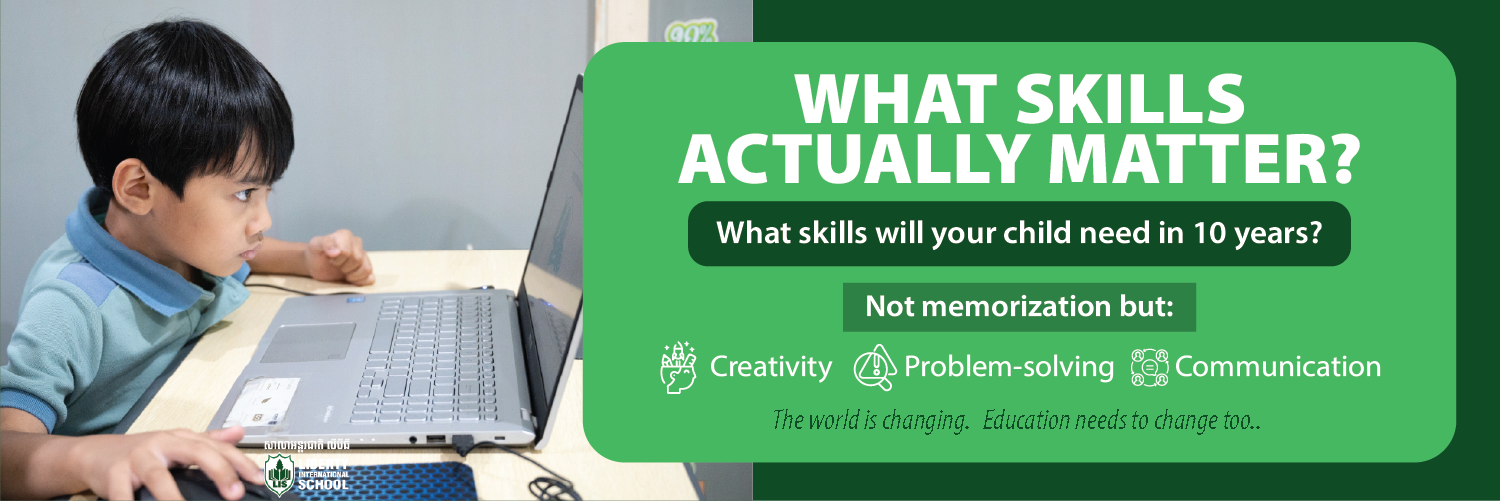
The students who thrive in the future will not simply be the ones who memorize the most facts. They will be the ones who can think creatively, communicate confidently across cultures, and adapt to change quickly.
And surprisingly, the foundation for those abilities begins much earlier than most parents realize—between the ages of 3 and 6.
The Skills the Future Rewards
For many years, education focused heavily on memorization and repetition. While foundational knowledge is still important, modern employers increasingly value a different set of abilities:
Creativity
Children who learn to ask questions, experiment, and solve problems develop the confidence to create new ideas instead of simply following instructions.
Cross-Cultural Communication
The modern workplace connects people from different countries, languages, and cultures every day. Children who grow up bilingual and socially confident gain a major advantage in understanding and communicating with others.
Digital Fluency
Technology is now part of almost every career path. Young learners who become comfortable using technology in structured, meaningful ways develop confidence that carries into future learning and careers.
These abilities are not developed overnight in secondary school.
They begin in the early years through language exposure, guided play, problem-solving activities, teamwork, and meaningful interaction with teachers and classmates.
Why Starting Early Matters
Research consistently shows that the early childhood years are critical for language development, social skills, and cognitive growth. Liberty International School’s preschool curriculum emphasizes literacy, numeracy, creativity, and social-emotional development because these are the building blocks for future success.
Children who begin structured learning early often demonstrate:
-
Stronger communication skills
-
Better adaptability in new environments
-
Greater confidence speaking with peers and adults
-
Improved problem-solving abilities
-
More independence and initiative
-
Stronger emotional regulation and teamwork skills
These advantages are not only academic—they shape how children approach life itself.
Learning Beyond Memorization
At Liberty International School, the goal is not simply to teach children information.
The goal is to help children learn how to think.
The international preschool curriculum introduces language arts, mathematics, science, creative arts, and hands-on learning in ways that encourage curiosity and exploration.
Young learners participate in activities that promote:
-
Critical thinking
-
Creativity
-
Communication
-
Collaboration
-
Confidence
This student-centered approach helps children become active learners instead of passive listeners.
Multilingual Learning Builds More Than Language
One of the greatest advantages children can gain early is bilingual ability and later trilingual with Chinese.
Students exposed to two(or more) languages during the preschool years develop stronger listening skills, mental flexibility, and communication abilities. By Kindergarten, many students are already developing the ability to read, write, and speak in two languages before entering Grade 1.
In a future where international communication matters more than ever, bilingual learners gain a lifelong advantage.
Preparing Children for a Bigger World
The world our children enter will reward adaptability, confidence, communication, and creativity.
Children who start early in a structured, international learning environment are not just preparing for primary school—they are preparing for life in a rapidly changing world.
The future is already changing.
The question for parents is simple:
Will your child be ready for it?